
English| EUR
Suggested for you
More currencies
Choose a language
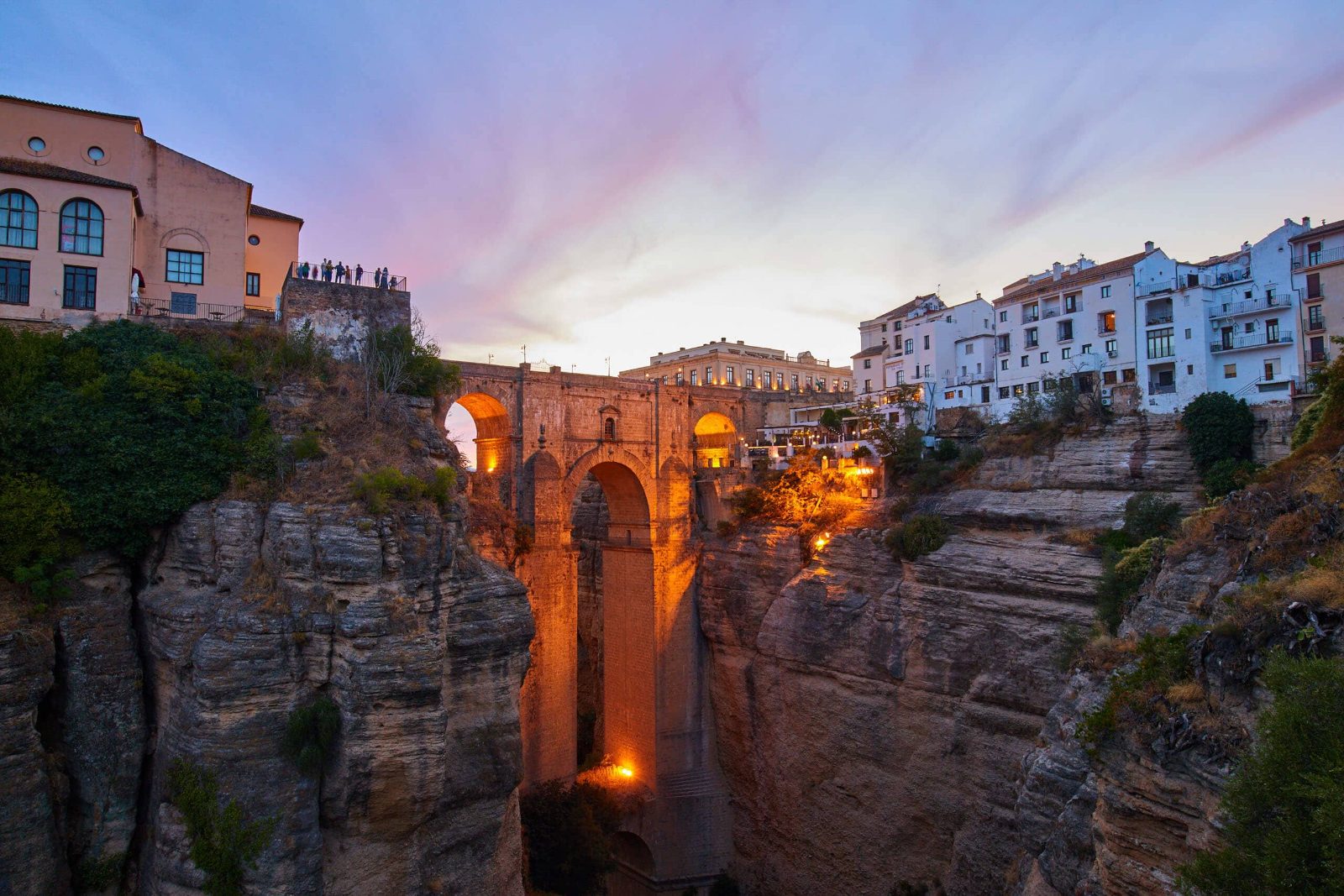
Ronda sits 60 kilometers inland from Benalmádena, perched above the El Tajo gorge in Málaga province. The journey crosses the coastal plain before climbing through olive groves and white villages into the Serranía de Ronda range. Four transport options connect the coast to the cliff-edge city, each with different journey times and logistical trade-offs.
Quick answer
The drive from Benalmádena to Ronda takes 70 to 90 minutes via the A-397 and A-367 mountain roads. Direct train service does not exist; rail travelers must change at Málaga or Algeciras, extending the journey to three hours or more. Daily bus departures run from Torremolinos (the nearest hub to Benalmádena) to Ronda in approximately two hours. Organized day tours handle all logistics and typically include guided visits to the Puente Nuevo and bullring.
The A-397 from the Costa del Sol to Ronda was widened in the early 2000s, cutting what was once a winding two-lane climb into a manageable hour-long ascent. The road departs the AP-7 at San Pedro de Alcántara, passes the turnoff for Istán reservoir, and threads through Ojén before entering the Sierra de las Nieves. Beyond the village of Yunquera, the route joins the A-366 briefly, then splits onto the A-367 for the final approach into Ronda's northern outskirts. Drivers arrive at Paseo Blas Infante, the avenue that skirts the gorge and leads directly to the historic center. Traveling from Benalmádena to Ronda by rail requires a connection. Renfe's Cercanías line links Benalmádena-Arroyo de la Miel station to Málaga-María Zambrano in 35 minutes; from there, regional trains depart for Ronda two or three times daily, following the valley route through Cártama, Álora, and the Guadalhorce gorge. The rail journey from Málaga to Ronda takes just under two hours. An alternative route runs south via Fuengirola and Algeciras, but schedules are infrequent and the total travel time exceeds four hours. The Ronda railway station stands one kilometer from the Puente Nuevo, a 15-minute uphill walk or a short taxi ride. Bus service between the coast and Ronda operates under the Avanzabus and Damas networks. Departures originate in Torremolinos, five kilometers east of Benalmádena, and call at intermediate stops before crossing the mountains. The route mirrors the A-397 highway and takes between 1 hour 50 minutes and 2 hours 15 minutes depending on stops. Tickets are sold online or at the station; advance booking is recommended during summer and weekends. Buses arrive at Ronda's Plaza Concepción García Redondo, a five-minute walk from the old town. Organized coach tours departing the Costa del Sol collect passengers from hotels along the Benalmádena seafront and consolidate groups before heading inland. Most itineraries allocate three to four hours in Ronda, with guided commentary at the Puente Nuevo, the bullring, and the Arab baths. Tour schedules are fixed, but the convenience of door-to-door transport and bundled monument entry appeals to visitors prioritizing ease over flexibility. Independent travelers can replicate the route by car or bus and tailor their own timing to the municipal tourist voucher's monument access hours.
“The A-397 from the Costa del Sol to Ronda was widened in the early 2000s, cutting what was once a winding two-lane climb into a manageable hour-long ascent.”
Ronda is located inland from the Costa del Sol, accessible from Benalmádena via mountain roads or combined rail connections. Planning your route in advance is essential due to the lack of direct public transport links between these two locations.
A-397 via San Pedro de Alcántara
C-1 to Málaga María Zambrano then MD train to Ronda
Bus to Málaga then bus to Ronda
Direct coach transfer from Benalmádena
Arriving early helps avoid peak afternoon crowds and ensures time for full monument access. We recommend planning your arrival between 10:00–12:00.
The best arrival window is 10:00–12:00 to ensure full monument access and avoid peak afternoon crowds. Planning your visit for midweek helps manage visitor volume effectively.
Mild temperatures, 15°C to 24°C
Ideal for walking between locations comfortably.
Pleasant temperatures, 16°C to 25°C
Consistent weather supports flexible scheduling for travelers.
Hot temperatures, 20°C to 32°C
Early morning starts are essential due to heat.
—
Arriving at 10:00 minimizes wait times at popular sites.
Verdict: The best slot is Tuesday to Thursday, arriving at 10:00, during April or October.
The monuments in Ronda operate on a consistent weekly schedule, with slightly shorter hours on Sundays.
Everything you need to know about how to get to ronda from benalmadena
Travelers typically choose between driving a rental car, booking an organized tour, or using public transport. Understanding how to get to ronda from benalmadena is simpler once you decide if you prefer the flexibility of a private vehicle or the convenience of a guided service.
Yes, many visitors prefer organized tours as a stress-free alternative for how to get to ronda from benalmadena. These excursions often provide round-trip transport and local insights into the city's historical landmarks.
Driving is a common option for those comfortable with mountain roads, offering a scenic route through the Andalusian countryside. When considering how to get to ronda from benalmadena by car, ensure you account for fuel costs and potential parking challenges near the town center.
The journey usually takes approximately 1.5 to 2 hours depending on your chosen mode of transport and traffic conditions. Planning your trip duration is essential for anyone researching how to get to ronda from benalmadena to ensure enough time for sightseeing.
There is no direct train connection, meaning travelers must typically head to Malaga city first to catch a rail service to Ronda. This multi-leg journey makes it less popular than direct driving or tour options for those prioritizing efficiency.
Arriving at the monument location on Paseo Blas Infante is best done between 10:00 and 12:00 to avoid afternoon crowds. The municipal tourist voucher covers entry to multiple key monuments for 12 EUR, providing efficient access to the city's heritage sites.